BEGIN:VCALENDAR
VERSION:2.0
PRODID:-//Western Maine Audubon - ECPv6.17.5//NONSGML v1.0//EN
CALSCALE:GREGORIAN
METHOD:PUBLISH
X-WR-CALNAME:Western Maine Audubon
X-ORIGINAL-URL:https://western.maineaudubon.org
X-WR-CALDESC:Events for Western Maine Audubon
REFRESH-INTERVAL;VALUE=DURATION:PT1H
X-Robots-Tag:noindex
X-PUBLISHED-TTL:PT1H
BEGIN:VTIMEZONE
TZID:America/New_York
BEGIN:DAYLIGHT
TZOFFSETFROM:-0500
TZOFFSETTO:-0400
TZNAME:EDT
DTSTART:20190310T070000
END:DAYLIGHT
BEGIN:STANDARD
TZOFFSETFROM:-0400
TZOFFSETTO:-0500
TZNAME:EST
DTSTART:20191103T060000
END:STANDARD
BEGIN:DAYLIGHT
TZOFFSETFROM:-0500
TZOFFSETTO:-0400
TZNAME:EDT
DTSTART:20200308T070000
END:DAYLIGHT
BEGIN:STANDARD
TZOFFSETFROM:-0400
TZOFFSETTO:-0500
TZNAME:EST
DTSTART:20201101T060000
END:STANDARD
BEGIN:DAYLIGHT
TZOFFSETFROM:-0500
TZOFFSETTO:-0400
TZNAME:EDT
DTSTART:20210314T070000
END:DAYLIGHT
BEGIN:STANDARD
TZOFFSETFROM:-0400
TZOFFSETTO:-0500
TZNAME:EST
DTSTART:20211107T060000
END:STANDARD
BEGIN:DAYLIGHT
TZOFFSETFROM:-0500
TZOFFSETTO:-0400
TZNAME:EDT
DTSTART:20220313T070000
END:DAYLIGHT
BEGIN:STANDARD
TZOFFSETFROM:-0400
TZOFFSETTO:-0500
TZNAME:EST
DTSTART:20221106T060000
END:STANDARD
BEGIN:DAYLIGHT
TZOFFSETFROM:-0500
TZOFFSETTO:-0400
TZNAME:EDT
DTSTART:20230312T070000
END:DAYLIGHT
BEGIN:STANDARD
TZOFFSETFROM:-0400
TZOFFSETTO:-0500
TZNAME:EST
DTSTART:20231105T060000
END:STANDARD
BEGIN:DAYLIGHT
TZOFFSETFROM:-0500
TZOFFSETTO:-0400
TZNAME:EDT
DTSTART:20240310T070000
END:DAYLIGHT
BEGIN:STANDARD
TZOFFSETFROM:-0400
TZOFFSETTO:-0500
TZNAME:EST
DTSTART:20241103T060000
END:STANDARD
BEGIN:DAYLIGHT
TZOFFSETFROM:-0500
TZOFFSETTO:-0400
TZNAME:EDT
DTSTART:20250309T070000
END:DAYLIGHT
BEGIN:STANDARD
TZOFFSETFROM:-0400
TZOFFSETTO:-0500
TZNAME:EST
DTSTART:20251102T060000
END:STANDARD
END:VTIMEZONE
BEGIN:VEVENT
DTSTART;TZID=America/New_York:20240518T080000
DTEND;TZID=America/New_York:20240518T090000
DTSTAMP:20260131T162143Z
CREATED:20240208T234431Z
LAST-MODIFIED:20260131T162143Z
UID:953-1716019200-1716022800@western.maineaudubon.org
SUMMARY: Spring Warbler Walk: "Birds and Bagels" -
DESCRIPTION:The walk will be at the Whistle Stop Trail in Farmington\, on Saturday\, May 18th\, at 8:00 AM\, rain or shine. Nick Leadley to lead the walk again this year. Coffee and Bagels/Donuts at 8:00 prior to the walk.\nAll welcome – birders young and old\, as well as novice or first time birders.
URL:https://western.maineaudubon.org/event/spring-warbler-walk-birds-and-bagels/
LOCATION:Whistle Stop Trail\, Farmington
CATEGORIES:Bird Walks
ORGANIZER;CN="Western Maine Audubon":MAILTO:wma@westernmaineaudubon.org
END:VEVENT
BEGIN:VEVENT
DTSTART;TZID=America/New_York:20240508T190000
DTEND;TZID=America/New_York:20240508T203000
DTSTAMP:20260131T162347Z
CREATED:20240128T231054Z
LAST-MODIFIED:20260131T162347Z
UID:948-1715194800-1715200200@western.maineaudubon.org
SUMMARY: Memories of a Wildlife Biologist - Ron Joseph -
DESCRIPTION:May 8th - Memories of a Wildlife Biologist\nSpeaker: Ronald Joseph\nZoom: Available for people not able to attend in person. Link: Click Here\nRon’s talk will mainly focus on wildlife and his role in protecting and conserving species as described in detail in his recent book: Bald Eagles\, Bear Cubs\, and Hermit Bill: Memories of a Wildlife Biologist\, published by ISLANDPORT PRESS\, 2023.\nHe will focus in particular on the most current threat facing Maine's fish and wildlife: a warming Pine Tree State that will result in winners and losers. \nRon Joseph was born in Waterville in 1952 and grew up in neighboring Oakland. He developed a love for the outdoors and wildlife on his grandparents' dairy farm in Mercer\, where he spent many weekends\, summers\, and vacations working and exploring. He especially loved birds\, a passion nurtured by his mother\, and spent hours perched on stacks of hay bales watching swallows dart in and out of the barn to feed their nestlings. That fascination led him to study ornithology at the University of New Hampshire where he earned a degree in wildlife conservation. He later earned a master's degree in zoology from Brigham Young University.\nIn 1978\, he began a career as a state and federal wildlife biologist\, often with a focus on the restoration of endangered species. In 1990\, Ron began working as a private lands wildlife biologist for the U.S. Fish and Wildlife Service\, helping landowners restore hayfields and wetlands for migratory birds. He played a pivotal role in restoring Maine’s bald eagle\, peregrine falcon\, and Canada lynx populations. He is now retired\, but continues to speak\, volunteer\, and lead birding trips. In this Q&A we spoke to Ron about his love for birds\, his accomplishments as a conservationist\, and his thoughts on the current state of wildlife preservation in Maine.\n\nRon with baby Lynx. Photo Credit - Paul Cyr
URL:https://western.maineaudubon.org/event/memories-of-a-wildlife-biologist-ron-joseph/
LOCATION:Thomas Auditorium\, Preble Hall\, UMF\, 173 High Street\, Farmington\, Maine\, 04938
CATEGORIES:Talks
ORGANIZER;CN="Western Maine Audubon":MAILTO:wma@westernmaineaudubon.org
END:VEVENT
BEGIN:VEVENT
DTSTART;TZID=America/New_York:20240410T190000
DTEND;TZID=America/New_York:20240410T203000
DTSTAMP:20260131T162347Z
CREATED:20240128T225710Z
LAST-MODIFIED:20260131T162347Z
UID:946-1712775600-1712781000@western.maineaudubon.org
SUMMARY: Maine's Turtles by Matthew Chatfield -
DESCRIPTION:April 10 - Everything you didn’t realize you needed to know about turtles in Maine\nSpeaker: Matthew Chatfield\nZoom: Available for people not able to attend in person. Click Here \n\nWood Turtle\n\nMatt with Spotted Turtle\n\nSpotted Turtle \nTurtles are somehow so familiar to us—having found a place in many cultures’ creation stories\, being featured in countless children’s books\, and making Hollywood appearances—yet researchers are only now appreciating their unique biology and ecological roles. They have existed for 230 million years and have proven extraordinarily resilient\, even surviving the mass extinction event that killed off the non-avian dinosaurs. Despite our affection for them and their resilience\, turtles are facing unprecedented challenges in the modern world and rank among the most endangered vertebrate groups on Earth. Maine is fortunate to be home to many of these beautiful\, enduring\, and vulnerable creatures. This talk will explore the turtles of Maine—their biology\, how to observe them\, and what we can all do to ensure their continued existence on our fragile planet. \nMatthew Chatfield is an Assistant Professor of Evolution and Eco-Health at the University of Maine where he studies the evolution\, ecology and conservation of reptiles and amphibians. He received a BA in Biology from the University of Chicago and a PhD in Ecology and Evolutionary Biology from the University of Michigan. He subsequently spent five years at Tulane University and six years at Unity College. Dr. Chatfield also serves as the Principal Investigator of the Maine Wood Turtle Project.
URL:https://western.maineaudubon.org/event/maines-turtles-by-matthew-chatfield/
LOCATION:Thomas Auditorium\, Preble Hall\, UMF\, 173 High Street\, Farmington\, Maine\, 04938
CATEGORIES:Talks
ORGANIZER;CN="Western Maine Audubon":MAILTO:wma@westernmaineaudubon.org
END:VEVENT
BEGIN:VEVENT
DTSTART;TZID=America/New_York:20240313T190000
DTEND;TZID=America/New_York:20240313T203000
DTSTAMP:20260131T162347Z
CREATED:20240128T132536Z
LAST-MODIFIED:20260131T162347Z
UID:940-1710356400-1710361800@western.maineaudubon.org
SUMMARY: Maine Big Night - Amphibian Migration Monitoring and Rescue -
DESCRIPTION:March 13th – Maine Big Night: Amphibian Migration Monitoring.\nSpeaker: Greg LeClair\nClick here to Zoom: Password-192292 Available for people not able to attend in person.\nGreg with rescued salamanders \nApril showers bring more than just May flowers to Maine - they bring the massive annual migration of amphibians\, colloquially known as "big nights". As many of these amphibians plod and hop through the landscape\, they face unfortunately steep odds of reaching their breeding locations. While natural barriers (rivers\, mountains\, etc.) and predators are risks that Wood Frogs and Spotted Salamanders have calculated into their migratory plans\, many have not had the time to adjust to the newest\, and perhaps most deadly\, risk during these migrations - roads. \nThis persistent and likely increasing threat is what inspired the creation of Maine Big Night: Amphibian Migration Monitoring (MBN). MBN is a community science project that harnesses the energy of community members throughout the state to accomplish two major tasks; record data on amphibian crossings and assist the creatures across the road to directly reduce mortality as a temporary means of protection. \nSince the inception of the project in 2018\, MBN has recorded 21\,586 amphibians and surveyed 349 sites from Kittery to St. Agatha\, which was recorded on the backs of 388 unique certified volunteers (plus many more joining them - perhaps thousands of Mainers have now participated in MBN!). Combined\, volunteers have contributed just over 224 days of road monitoring\, allowing 15\,939 amphibians to be shepherded safely to and from their breeding locations. \nCome and learn more about salamanders and how you can help them.
URL:https://western.maineaudubon.org/event/maine-big-night-amphibian-migration-monitoring-and-rescue/
LOCATION:Thomas Auditorium\, Preble Hall\, UMF\, 173 High Street\, Farmington\, Maine\, 04938
CATEGORIES:Talks
ORGANIZER;CN="Western Maine Audubon":MAILTO:wma@westernmaineaudubon.org
END:VEVENT
BEGIN:VEVENT
DTSTART;TZID=America/New_York:20231108T190000
DTEND;TZID=America/New_York:20231108T203000
DTSTAMP:20260131T162347Z
CREATED:20230629T140736Z
LAST-MODIFIED:20260131T162347Z
UID:930-1699470000-1699475400@western.maineaudubon.org
SUMMARY: Wildlife Tracking in Maine -
DESCRIPTION:Speaker: Charles Hulsey (Chuck) \nChuck will share wildlife tracking and species ID tips and techniques that he has used over the years while doing winter wildlife tracking surveys for lynx\, bobcat\, pine marten\, and fisher. These techniques allow for accurate identification of the owner’s tracks\, even if of poor quality\, which is commonly the case. I took the attached picture will doing Canada lynx surveys in western Maine. The tracks were filled in but could be identified from a hundred feet away as lynx due to their size\, and just importantly\, the track pattern. I will cover these things during my talk. \nCharles Hulsey: a 1978 graduate of the University of Maine at Orono with BS Wildlife Mgt. and BS Forest Management degrees. He worked for the Maine Forest Service from 1978-1988\, most of that time as a district forester providing management advice to small woodland owners. He has worked for the MDIFW since 1988\, nearly all of that time as the Regional Wildlife Biologist in Region D\, western Maine. He is presently working on three statewide projects: Writing wildlife habitat management guidelines for the Maine Bureau of Parks and Lands with fellow wildlife biologist Sarah Spencer; providing deer wintering area management assistance statewide; and providing additional assistance capacity to the Department’s relatively new private lands program
URL:https://western.maineaudubon.org/event/wildlife-tracking-in-maine/
LOCATION:Thomas Auditorium\, Preble Hall\, UMF\, 173 High Street\, Farmington\, Maine\, 04938
CATEGORIES:Talks
ORGANIZER;CN="Western Maine Audubon":MAILTO:wma@westernmaineaudubon.org
END:VEVENT
BEGIN:VEVENT
DTSTART;TZID=America/New_York:20231011T190000
DTEND;TZID=America/New_York:20231011T203000
DTSTAMP:20260131T162347Z
CREATED:20230629T140459Z
LAST-MODIFIED:20260131T162347Z
UID:929-1697050800-1697056200@western.maineaudubon.org
SUMMARY: Rising Seas and Warming Waters: climate stresses to Gulf of Maine marine species -
DESCRIPTION:Speakers: Dr Hannah Baranes\, and Andrew Allyn \nThe Gulf of Maine has one of the most biologically productive marine ecosystems in the world. It is also warming faster than 96% of the world’s oceans and experiencing rates of sea level rise higher than the global average. These changes place numerous stresses on Gulf of Maine marine species\, particularly colonial nesting seabirds that use Maine’s coastal islands for nesting habitat and rely on marine resources to feed themselves and their young. Hannah and Andrew invite you to their presentation to learn more about expected climate-driven changes in the Gulf of Maine and their potential impacts on marine species. \nDr. Hannah Baranes: Hannah joined GMRI in 2022 as a post-doctoral researcher in the Climate Center. Her work at GMRI uses statistical techniques to estimate flood hazard in areas where there are multiple drivers of flooding\, such as sea level rise\, tides\, storm surge and river flow. Before coming to GMRI\, Hannah completed her M.S. and Ph.D. in Geosciences from the University of Massachusetts Amherst\, where she focused on understanding the dynamic processes that shape the structure and function of coastal environments. Outside of work\, Hannah plays on Maine’s professional ultimate team\, Portland Rising\, and is an avid backcountry snowboarder. \nAndrew Allyn: Andrew is a quantitative research associate at GMRI and a PhD candidate at the University of Massachusetts Amherst. Since joining GMRI in 2017\, Andrew’s work has focused on building species distribution models to understand where marine species are now and where they might go in the future under different climate change scenarios. Before coming to GMRI\, Andrew completed his M.S. in Environmental Conservation at the University of Massachusetts Amherst while studying seabirds in Alaska and in the Gulf of Maine. When he isn’t at work\, Andrew enjoys exploring Maine’s great outdoors and making a mess in the wood shop.
URL:https://western.maineaudubon.org/event/rising-seas-and-warming-waters-climate-stresses-to-gulf-of-maine-marine-species/
LOCATION:Thomas Auditorium\, Preble Hall\, UMF\, 173 High Street\, Farmington\, Maine\, 04938
CATEGORIES:Talks
ORGANIZER;CN="Western Maine Audubon":MAILTO:wma@westernmaineaudubon.org
END:VEVENT
BEGIN:VEVENT
DTSTART;TZID=America/New_York:20230913T190000
DTEND;TZID=America/New_York:20230913T203000
DTSTAMP:20260131T162347Z
CREATED:20230629T135844Z
LAST-MODIFIED:20260131T162347Z
UID:927-1694631600-1694637000@western.maineaudubon.org
SUMMARY: Owls of Maine and the Maine Owl Pellet Project -
DESCRIPTION:Speaker: Zach Olson \nThe Maine Owl Pellet Project (MOPP) is a collaboration between the University of New England\, the Maine Department of Inland Fisheries and Wildlife\, and the United States Fish and Wildlife Service that aims to engage the public and promote crowdsourced science to better understand the diet of Maine’s owls and the distribution and composition of the small mammal community on which they prey\, including the threatened northern bog lemming\, to inform conservation efforts. The talk will combine information about the common owls in Maine\, an introduction to the northern bog lemming\, a project update\, and information about how interested individuals can participate. To learn more: https://sites.une.edu/maine-owl-pellet-project\nZach Olson: an Associate Professor of Animal Behavior at the University of New England. He received a B.S. in Wildlife and Fisheries Sciences from South Dakota State University in 2004\, a M.S. in Wildlife Ecology from Frostburg State University in 2006\, and a Ph.D. in Wildlife Genetics from Purdue University in 2010. He has authored or co-authored over 30 scientific publications focused on wildlife conservation and scavenging ecology\, and has worked with wild animals ranging from gray seals and bighorn sheep to hellbenders and timber rattlesnakes. He enjoys being outdoors with his wife and two young kids\, training his bird dog\, and being bitten by his small parrot.
URL:https://western.maineaudubon.org/event/owls-of-maine-and-the-maine-owl-pellet-project/
LOCATION:Thomas Auditorium\, Preble Hall\, UMF\, 173 High Street\, Farmington\, Maine\, 04938
CATEGORIES:Talks
ORGANIZER;CN="Western Maine Audubon":MAILTO:wma@westernmaineaudubon.org
END:VEVENT
BEGIN:VEVENT
DTSTART;TZID=America/New_York:20230510T190000
DTEND;TZID=America/New_York:20230510T203000
DTSTAMP:20260131T162347Z
CREATED:20230424T143721Z
LAST-MODIFIED:20260131T162347Z
UID:910-1683745200-1683750600@western.maineaudubon.org
SUMMARY: Butterflies of Maine -
DESCRIPTION:The Distribution and Ecology of the Butterflies of Maine \nThis talk will center around the findings presented in the Butterflies of Maine and Maritime Provinces\, to be published this fall by the Cornell University Press. This publication is based on a citizen-science project (the Maine Butterfly Survey or MBS) with field work conducted between 2003 and 2019. Many WMAS members contributed to the project. \nWe'll begin with a description of the distinguishing features of the five families of butterflies found in Maine. Then\, we'll explore the changes in distribution of many species\, including a new North American record and other state records as well as the extirpation of some species. We'll look at the importance of habitat in determining the presence of different butterfly species and conclude with an exploration of the effects of climate change on butterfly distribution. \nHerb Wilson is a Professor of Biology at Colby College where he teaches Ornithology\, Evolution and Diversity\, Marine Ecology and Marine Invertebrate Zoology. His primary research interests are the impacts of global climate change on bird migration and the foraging behavior of winter birds in Maine.\n Canadian Tiger Swallowtail Papilio canadensis Papilionidae Palermo ME
URL:https://western.maineaudubon.org/event/butterflies-of-maine/
LOCATION:North Dining Hall\, UMF
CATEGORIES:Talks
ORGANIZER;CN="Western Maine Audubon":MAILTO:wma@westernmaineaudubon.org
END:VEVENT
BEGIN:VEVENT
DTSTART;TZID=America/New_York:20230506T080000
DTEND;TZID=America/New_York:20230506T100000
DTSTAMP:20260131T162143Z
CREATED:20230424T190832Z
LAST-MODIFIED:20260131T162143Z
UID:913-1683360000-1683367200@western.maineaudubon.org
SUMMARY: Annual Warbler Walk -
DESCRIPTION:Join us for this AM walk led by Nick Leadley (www.touchthewildphotos.com) on the Whistle Stop Trail
URL:https://western.maineaudubon.org/event/annual-warbler-walk-2/
LOCATION:Whistle Stop Trail\, Farmington
CATEGORIES:Bird Walks
ORGANIZER;CN="Western Maine Audubon":MAILTO:wma@westernmaineaudubon.org
END:VEVENT
BEGIN:VEVENT
DTSTART;TZID=America/New_York:20230412T190000
DTEND;TZID=America/New_York:20230412T203000
DTSTAMP:20260131T162347Z
CREATED:20230126T143158Z
LAST-MODIFIED:20260131T162347Z
UID:897-1681326000-1681331400@western.maineaudubon.org
SUMMARY: The State of Maine's Lakes and What You Can Do To Help - Speaker: Susan Gallo -
DESCRIPTION:Photo Credit shutterstock_1445166614.\nMaine has over 2\,500 Great Ponds. The vast majority of them are in great shape\, due in large part to strong shoreland zoning laws that protect fragile lakeside habitat and to motivated homeowners who work to make sure their properties protect lakes. However\, many of Maine’s lakes are at risk of losing their clean\, clear water and many associated recreational\, habitat\, and economic values. These lakes are at a tipping point\, pushed there by stormwater that carries nutrients along for the ride and made more worrisome today due to climate change. Larger\, more intense storms multiply the volume of stormwater\, and threaten the quality of our lakes. Learn more about what’s happening with our lakes today\, and some of the exciting programs and policies that are in place (or may be in place with your help!) to improve lake health. From loon restoration to homeowner programs to community education efforts for kids\, there are many ways to get involved in protecting Western Maine’s precious lakes! \nSusan Gallo joined Maine Lakes as their Executive Director in 2018\, where she has continued to expand the LakeSmart program and is currently working on projects around lake economics and values\, loon restoration\, lake science outreach\, and collaborative freshwater education. Prior to that she was a\nwildlife biologist and program manager at Maine Audubon for 20 years\, where she directed the Maine Loon Project\, the Maine Amphibian Monitoring Project\, the Forestry for Maine Birds Program\, and Maine Audubon’s Renewable Energy Program. Her education includes a B.S. in Natural Resources from Cornell University\, and an M.S. in Organismal Biology and Ecology from the University of Montana. She has worked as a certified Stewardship Advisor for the state of Montana\, monitored nesting success for timber companies\, and has lived off-shore capturing and banding puffins and terns. Susan is a 2011 TogetherGreen Conservation Leadership Fellow\, and a 2018 Source Sustainability Award Winner. She lives in Cumberland Center with her husband and enjoys visits from her college-age daughters. In her spare time\, Susan likes to read\, garden\, run\, hike and make things.
URL:https://western.maineaudubon.org/event/the-state-of-maines-lakes-and-what-you-can-do-to-help-speaker-susan-gallo/
LOCATION:Thomas Auditorium\, Preble Hall\, UMF\, 173 High Street\, Farmington\, Maine\, 04938
CATEGORIES:Talks
ORGANIZER;CN="Western Maine Audubon":MAILTO:wma@westernmaineaudubon.org
END:VEVENT
BEGIN:VEVENT
DTSTART;TZID=America/New_York:20230308T190000
DTEND;TZID=America/New_York:20230308T203000
DTSTAMP:20260131T162347Z
CREATED:20230126T142302Z
LAST-MODIFIED:20260131T162347Z
UID:895-1678302000-1678307400@western.maineaudubon.org
SUMMARY: Great Blue Herons in Maine - Speaker: Danielle D'Auria -
DESCRIPTION:Phote Credit _SherrieTucker\nSpeaker: Danielle D’Auria\nDid you ever wonder where Maine’s Great Blue Herons go in winter\, and what path they travel to get there? Since 2016\, Maine Department of Inland Fisheries & Wildlife has deployed lightweight GPS tracking\ndevices on Great Blue Herons to follow their movements during nesting\, migration\, and wintering. This technology has revealed impressive migrations sometimes over long stretches of open ocean and for over\n60 hours non-stop to Florida\, the Bahamas\, Cuba\, and Haiti! Hear all about these majestic birds\, how over 100 volunteers have been monitoring their colonies for the past 14 years\, and how students are integral to tracking their movements within and beyond state lines. Danielle D’Auria is Maine Department of Inland Fisheries and Wildlife’s species expert on secretive marsh birds\, colonial wading birds\, common loons\, and black terns. Her work focuses on understanding statewide populations of these species as well as land management issues affecting the wetland habitats they depend on. Over the past 14 years\, she has devoted a great deal of effort to heron surveys and research\, including coordination of a volunteer monitoring program called the Heron Observation Network of Maine and has used GPS transmitters to track great blue herons during breeding\, migration\, and wintering.
URL:https://western.maineaudubon.org/event/great-blue-herons-in-maine/
LOCATION:Thomas Auditorium\, Preble Hall\, UMF\, 173 High Street\, Farmington\, Maine\, 04938
CATEGORIES:Talks
ORGANIZER;CN="Western Maine Audubon":MAILTO:wma@westernmaineaudubon.org
END:VEVENT
BEGIN:VEVENT
DTSTART;TZID=America/New_York:20221109T190000
DTEND;TZID=America/New_York:20221109T200000
DTSTAMP:20260131T162347Z
CREATED:20220902T010853Z
LAST-MODIFIED:20260131T162347Z
UID:884-1668020400-1668024000@western.maineaudubon.org
SUMMARY: Maine Lichens - Dr. Ronald Butler -
DESCRIPTION:Photo Credit - Dr.Butler\nThis talk was rescheduled from 10/12\nThis presentation will provide a general overview of the evolution\, morphology\, and physiology\nof lichens. The ecological role of lichens in terrestrial ecosystems with be discussed\, and the uses\nof lichens by animals (including humans) will be explored. A brief survey of some common Maine\nfoliose\, fruticose\, squamulose\, and crustose lichens will be presented\, and some key references for\nlichen identification will be highlighted.\nDr. Ron Butler retired in 2021 as Emeritus Professor at the University of Maine at Farmington after 40\nyears of teaching
URL:https://western.maineaudubon.org/event/maine-lichens-dr-ronald-butler/
LOCATION:Thomas Auditorium\, Preble Hall\, UMF\, 173 High Street\, Farmington\, Maine\, 04938
CATEGORIES:Talks
ORGANIZER;CN="Western Maine Audubon":MAILTO:wma@westernmaineaudubon.org
END:VEVENT
BEGIN:VEVENT
DTSTART;TZID=America/New_York:20221012T190000
DTEND;TZID=America/New_York:20221012T200000
DTSTAMP:20260131T162347Z
CREATED:20220902T011442Z
LAST-MODIFIED:20260131T162347Z
UID:885-1665601200-1665604800@western.maineaudubon.org
SUMMARY: Snow Birds: Following our Winged Friends in Winter - Dr. Sally Stockwell -
DESCRIPTION:Snow Bunting - Photo credit - Nick Leadley \nThis has been rescheduled from 11/9. Dr. Ron Butler will give his talk on lichens now on 11/9. \nAre you a snowbird? Do you head south during the winter in\nsearch of sunny\, warm weather with plentiful fresh\nlocal fruits and vegetables? Just like human snowbirds\, many\nof “our” birds head south for the winter as well. Come join\nSally Stockwell\, Director of Conservation at Maine Audubon\,\nto learn about the travels and winter homes of some of our\nbreeding birds. As a bonus you’ll also learn about the\nmigratory pathways of several bats and insects\, and learn\nabout the true snowbirds - those that visit us each winter\nfrom the Canadian taiga and tundra
URL:https://western.maineaudubon.org/event/snow-birds-following-our-winged-friends-in-winter-dr-sally-stockwell/
LOCATION:Thomas Auditorium\, Preble Hall\, UMF\, 173 High Street\, Farmington\, Maine\, 04938
CATEGORIES:Talks
ORGANIZER;CN="Western Maine Audubon":MAILTO:wma@westernmaineaudubon.org
END:VEVENT
BEGIN:VEVENT
DTSTART;TZID=America/New_York:20220914T190000
DTEND;TZID=America/New_York:20220914T200000
DTSTAMP:20260131T162347Z
CREATED:20220902T010614Z
LAST-MODIFIED:20260131T162347Z
UID:883-1663182000-1663185600@western.maineaudubon.org
SUMMARY: Loons - speaker Dr. Mark Pokras -
DESCRIPTION:Photo Credit – Margaret Gompper/Audubon Photography Awards \nDr. Pokres\, a graduate of Cornell and Tufts\nUniversity will be speaking on new research\nfindings concerning loons: their behaviors\, their reaction to environmental stress\,\nand threats to their well-being. A retired\nmember of the faculty at Tufts\, he regularly\nconsults for a variety of private\, state\, and\nfederal wildlife and environmental\nagencies. He has been doing mortality\nresearch on loons since 1987and is widely\nrecognized for this work on lead poisoning.\nPlease bring questions you might have concerning one of Maine’s favorite waterfowl
URL:https://western.maineaudubon.org/event/loons-speaker-dr-mark-pokras/
LOCATION:Thomas Auditorium\, Preble Hall\, UMF\, 173 High Street\, Farmington\, Maine\, 04938
CATEGORIES:Talks
ORGANIZER;CN="Western Maine Audubon":MAILTO:wma@westernmaineaudubon.org
END:VEVENT
BEGIN:VEVENT
DTSTART;TZID=America/New_York:20220514T080000
DTEND;TZID=America/New_York:20220514T103000
DTSTAMP:20260131T162418Z
CREATED:20220214T140146Z
LAST-MODIFIED:20260131T162418Z
UID:860-1652515200-1652524200@western.maineaudubon.org
SUMMARY: New - Bird Walk on Perham Stream Birding Trail -
DESCRIPTION:Perham Stream Birding Trail\, 8:00am\, May14th. This walk will be led by Nick Ledley and is cosponsored by the Rangeley Lakes Heritage Trust. For further information and directions
URL:https://western.maineaudubon.org/event/new-bird-walk-on-perham-stream-birding-trail/
LOCATION:Madird\, Maine
CATEGORIES:Bird Walks
ORGANIZER;CN="Western Maine Audubon":MAILTO:wma@westernmaineaudubon.org
END:VEVENT
BEGIN:VEVENT
DTSTART;TZID=America/New_York:20220511T190000
DTEND;TZID=America/New_York:20220511T203000
DTSTAMP:20260131T162347Z
CREATED:20220214T134710Z
LAST-MODIFIED:20260131T162347Z
UID:857-1652295600-1652301000@western.maineaudubon.org
SUMMARY: Maine's Damselflies and Dragonflies by Ron Butler -
DESCRIPTION:This presentation will begin with a general overview of the evolution\, ecology\, and behavior of damselflies and dragonflies (Order Odonata). This will be followed by a brief survey of some of Maine’s 161 known odonate species. Finally\, conservation concerns for this important group of insects will be discussed\, and resources to facilitate contributions by community members interested in furthering our understanding of Maine’s odonate fauna will be explored. \nDr. Ron Butler retired in 2021 as Emeritus Professor at the University of Maine at Farmington after 40 years of teaching. He has published papers on the ecology and behavior of mice\, beavers\, gulls\, petrels\, guillemots\, skuas\, penguins\, damselflies\, dragonflies\, and bumble bees\, and he is presently co-authoring a book entitled Butterflies of Maine and the Canadian Maritime Provinces. For over twenty years\, Ron has helped plan and coordinate statewide community-science projects focused on Maine insects\, and he remains active in research and conservation initiatives in collaboration with MDIFW.
URL:https://western.maineaudubon.org/event/maines-damselflies-and-dragonflies-by-ron-butler/
LOCATION:Lincoln Auditorium\, Roberts Learning Center\, UMF
CATEGORIES:Talks
ORGANIZER;CN="Western Maine Audubon":MAILTO:wma@westernmaineaudubon.org
END:VEVENT
BEGIN:VEVENT
DTSTART;TZID=America/New_York:20220507T070000
DTEND;TZID=America/New_York:20220507T083000
DTSTAMP:20260131T162418Z
CREATED:20220214T135328Z
LAST-MODIFIED:20260131T162418Z
UID:859-1651906800-1651912200@western.maineaudubon.org
SUMMARY: Annual Warbler Bird Walk -
DESCRIPTION:Whistle Stop Trail\, 7 AM\, May 7th\, rain or shine. Meet in the parking lot at the trail head across the street from the West Farmington Post Office. Drive in a short distance to find the parking area.\nThis year lead by Nick Leadley\, wild life photographer and accomplished birder
URL:https://western.maineaudubon.org/event/annual-warbler-bird-walk/
LOCATION:Whistle Stop Trail\, Farmington
CATEGORIES:Bird Walks
ORGANIZER;CN="Western Maine Audubon":MAILTO:wma@westernmaineaudubon.org
END:VEVENT
BEGIN:VEVENT
DTSTART;TZID=America/New_York:20220413T190000
DTEND;TZID=America/New_York:20220413T203000
DTSTAMP:20260131T162347Z
CREATED:20220214T134212Z
LAST-MODIFIED:20260131T162347Z
UID:856-1649876400-1649881800@western.maineaudubon.org
SUMMARY: Gardening to Please the Birds and the Bees by Gary Fish -
DESCRIPTION:If you have read Dr. Doug Tallamy’s books Nature’s Best Hope\, Bringing Nature home and The Living Landscape you understand the importance of incorporating native plants into our landscapes. Many of our gardens are filled with plants from Asian and Europe which our native insects do not recognize as food sources. The lack of these insect resources impacts the ability of our birds to raise their young. Gary will give an overview of these concerns and provide resources and ideas on how to incorporate native plants into our gardens. \nGary received a B.S. in Forest and Wildlife Management from University of Maine\, College of Forest Resources in 1982. He has been the State Horticulturist since 2015 and Manager of Pesticide Programs for the Board of Pesticides Control. He has been a practicing Licensed Professional Forester since 1985 and is the former chair of the Arborist Board.\nGary grew up in Farmington\, Maine. He classifies himself as an “entomologist from birth” and he was inspired to love plants by his Mother who always grew beautiful roses and rock gardens. He is also a landscape and nature photographer. (Phish Photography on Etsy)
URL:https://western.maineaudubon.org/event/gardening-to-please-the-birds-and-the-bees-by-gary-fish/
LOCATION:Classroom 101\, Roberts Learning Center\, UMF\, Farmington\, ME\, 04938\, United States
CATEGORIES:Talks
ORGANIZER;CN="Western Maine Audubon":MAILTO:wma@westernmaineaudubon.org
END:VEVENT
BEGIN:VEVENT
DTSTART;TZID=America/New_York:20220309T190000
DTEND;TZID=America/New_York:20220309T203000
DTSTAMP:20260131T162347Z
CREATED:20220214T133509Z
LAST-MODIFIED:20260131T162347Z
UID:854-1646852400-1646857800@western.maineaudubon.org
SUMMARY: Invasive Plants in Maine by Hunter Manley -
DESCRIPTION:Hunter will be discussing invasive plants in Maine with a focus on their impact on wildlife and forestry. The growing prevalence of any of these species threatens the health of their host ecosystem\, so identifying them early and planning for treatment is essential for maintaining productive habitat and forests. For the most common invasive plants in Western Maine\nphoto examples of infestations and treatment will assist attendees in\nlearning to identify and prevent the spread of these species. \nHunter is a consulting forester and pesticide applicator living in Old Town where he operates Legacy Woodlot Services. He graduated from the University of Maine with a bachelor’s degree in Forestry in 2017\, and has been working on invasive plant control\, NRCS cost-share programs\, and other forestry projects. He has worked with Maine Natural Areas Program\, towns\, and land trusts on restoring natural communities affected by invasive plants
URL:https://western.maineaudubon.org/event/invasive-plants-in-maine-by-hunter-manley/
LOCATION:Lincoln Auditorium\, Roberts Learning Center\, UMF
CATEGORIES:Talks
ORGANIZER;CN="Western Maine Audubon":MAILTO:wma@westernmaineaudubon.org
END:VEVENT
BEGIN:VEVENT
DTSTART;TZID=America/New_York:20211110T190000
DTEND;TZID=America/New_York:20211110T203000
DTSTAMP:20260131T162348Z
CREATED:20210906T133213Z
LAST-MODIFIED:20260131T162348Z
UID:837-1636570800-1636576200@western.maineaudubon.org
SUMMARY: Unique Characteristics of Trees - Speaker: Patty Cormier -
DESCRIPTION:Why do trees have individual characteristics? Why is some bark smooth and some rough? Some light colored and some dark? Why are some leaves lobed and some smooth along the edges? Patty Cormier will answer many of these questions and more. This is\, she says\, one of her favorite topics.\nPatty Cormier was appointed as Maine State Forester in 2019. For the previous 20 years\, she was a District Forester for the Maine Forest Service first in the mid coast\, then in the western mountain regions. Prior to that\, she was a Landowner Assistance Forester for Georgia Pacific Corp. in Downeast Maine for 10 years. Over the years\, Patty has been involved in organizations such as supervisor on the Franklin County Soil and Water Conservation District\, Farmington Conservation Commission member\, secretary and Somerset County chair for the Maine Tree Farm Committee\, and former board member of the Maine Woodland Owners of Maine. Patty is an on-call firefighter for the Farmington Fire Department as well as a part-time Advanced EMT for Northstar Ambulance. Patty grew up in the beautiful western mountains in Kingfield and now lives in Farmington with her husband and two dogs. \nNote: Following UMF guidelines\, Masks are required. Given the Delta Variant surge please check back closer to the time to be sure that UMF has not restricted our use of Thomas Auditorium. At this time\, the auditorium is available for our use\, and the talk is planned as an in-person event. It will be recorded and available on our website for those unable to attend in-person.
URL:https://western.maineaudubon.org/event/unique-characteristics-of-trees-speaker-patty-cormier/
LOCATION:Thomas Auditorium\, Preble Hall\, UMF\, 173 High Street\, Farmington\, Maine\, 04938
CATEGORIES:Talks
ORGANIZER;CN="Western Maine Audubon":MAILTO:wma@westernmaineaudubon.org
END:VEVENT
BEGIN:VEVENT
DTSTART;TZID=America/New_York:20211013T190000
DTEND;TZID=America/New_York:20211013T203000
DTSTAMP:20260131T162348Z
CREATED:20210906T132237Z
LAST-MODIFIED:20260131T162348Z
UID:833-1634151600-1634157000@western.maineaudubon.org
SUMMARY: Ethical Questions for the Outdoor Naturalist - Speaker: Doug Hitchcox -
DESCRIPTION:Birding\, and other wildlife observing\, provides an\nintimate connection to nature that makes us better\nstewards of the environment and even provides us with\nwellness and mental health benefits\, but through our\npursuits\, are we doing more harm than good?\nIn this program\, Maine Audubon’s Staff Naturalist\, Doug\nHitchcox\, will talk about many of the ethical issues that\nwe confront as bird watchers\, and dispel some of the\nmyths that exist in our relationship with nature. Topics\nwill range from: bird feeding\, does it actually help birds?\nWhy are bird friendly yards reportedly more deadly for\nbirds? Should you join the “chase” to go see a rare bird being reported? Why do cats need to be kept indoors? When should you let nature take its course or when should you intervene? Many of these questions may raise ethical or social dilemmas\, but Doug will provide the science-based answers that put the birds\, and other wildlife\, first. \nNote: Following UMF guidelines\, Masks are required. Given the Delta Variant surge please check back closer to the time to be sure that UMF has not restricted our use of Thomas Auditorium. At this time\, the auditorium is available for our use\, and the talk is planned as an in-person event. It will be recorded and available on our website for those unable to attend in-person.
URL:https://western.maineaudubon.org/event/ethical-questions-for-the-outdoor-naturalist/
CATEGORIES:Talks
ORGANIZER;CN="Western Maine Audubon":MAILTO:wma@westernmaineaudubon.org
END:VEVENT
BEGIN:VEVENT
DTSTART;TZID=America/New_York:20210908T190000
DTEND;TZID=America/New_York:20210908T203000
DTSTAMP:20260131T162348Z
CREATED:20210824T012250Z
LAST-MODIFIED:20260131T162348Z
UID:827-1631127600-1631133000@western.maineaudubon.org
SUMMARY: What You Should Know About the Threat of Aquatic Invaders in Maine - Speaker: Roberta Hill -
DESCRIPTION:What makes an organism invasive? What threats do invasive\norganisms pose to Maine’s native ecosystems? How do\ninvasive aquatic species impact humans? What are the\ndrivers behind introduction of invaders to Maine and the\nvectors exacerbating their spread within the state? What\nare some of the invasive species we are most concerned\nabout here in Maine? What is Maine doing to address these\nconcerns? Importantly\, what can WE all do to help? In her\ntalk\, Roberta Hill\, Invasive Species Program Director for\nLake Stewards of Maine\, will answer all of these questions\nand more\nRoberta is an aquatic ecologist and environmental educator who has been active in the field of lake protection and community outreach in Maine for thirty years and instrumental in the creation and development of some of Maine’s most successful and long-standing lake education programs. Currently the Invasive Species Program Director for Lake Stewards of Maine\, Roberta is the originator and coordinator of LSM’s internationally recognized Invasive Plant Patrol (IPP) program\, through which over 5\,000 individuals (volunteers\, professionals\, agency personnel\, students\, teachers and others) have now been trained to screen Maine waterbodies for the presence of invasive aquatic plants and animals. Roberta is the principal author of Maine Field Guide to Invasive Aquatic Plants\, co-author of Citizens’ Guide to Invasive Aquatic Plant Management\, and principal content developer for Maine Field Guide to Aquatic Phenomena (which will be available both online and as a downloadable smartphone application this July). \nALL WHO ATTEND ARE REQUIRED TO WEAR A MASK AND PRACTICE SOCIAL DISTANCING. \nPhoto: Blossom of White Floating Heart\, an aquatic invasive.\nPhoto Credit - Lake Stewards of Maine.
URL:https://western.maineaudubon.org/event/what-you-should-know-about-the-threat-of-aquatic-invaders-in-maine/
CATEGORIES:Talks
ORGANIZER;CN="Western Maine Audubon":MAILTO:wma@westernmaineaudubon.org
END:VEVENT
BEGIN:VEVENT
DTSTART;TZID=America/New_York:20210512T190000
DTEND;TZID=America/New_York:20210512T200000
DTSTAMP:20260131T162348Z
CREATED:20210206T154039Z
LAST-MODIFIED:20260131T162348Z
UID:797-1620846000-1620849600@western.maineaudubon.org
SUMMARY: Peregrine Falcon restoration in Acadia National Park and Highlights of the Cadillac Mountain Hawk Watch Speaker: Ranger Patrick Kark -
DESCRIPTION:Register \nAs one of the first locations chosen to recover\nperegrine falcons\, Acadia National Park has a\nstoried history in the recovery of peregrine falcons.\nJoin Ranger Patrick Kark as he discusses the success of\nthe recovery project within the park and the reach\nAcadia’s falcons have had far outside Acadia’s borders. Acadia also hosts the\nCadillac Mountain Hawkwatch which will be entering its 27th counting\nseason in 2021. Learn more about the experience of hawkwatch on the highest\nmountain on the eastern seaboard and how Cadillac fits into the larger network\nof hawk migration monitoring sites across the continent.\nRanger Patrick Kark came to Maine in 2014 as Acadia’s raptor intern. He has\nworked seven seasons at the park as an ornithology park ranger and is currently\nworking as a visual information specialist for the park.\nACADIA NATIONAL PARK\, MAINE - July 3\, 2019 -- Juvenile peregrine falcons as seen on their nest cliff at Jordan Cliffs on Penobscot Mountain in Acadia National Park. (Photo by Will Greene/Friends of Acadia)
URL:https://western.maineaudubon.org/event/peregrine-falcon-restoration-in-acadia-national-park-and-highlights-of-the-cadillac-mountain-hawk-watch-speaker-ranger-patrick-kark/
CATEGORIES:Talks
END:VEVENT
BEGIN:VEVENT
DTSTART;TZID=America/New_York:20210414T190000
DTEND;TZID=America/New_York:20210414T200000
DTSTAMP:20260131T162348Z
CREATED:20210206T152434Z
LAST-MODIFIED:20260131T162348Z
UID:795-1618426800-1618430400@western.maineaudubon.org
SUMMARY: Saving Seabirds: New Lessons From Puffins Speaker: Dr. Stephen W. Kress -
DESCRIPTION:Register \nWorldwide\, about one third of all\nseabird species are now globally\nthreatened because of effects of\ninvasive predatory mammals\, marine\npollution\, coastal development and\neffects of climate change. Against\nthis grim background\, Dr. Kress’s\npresentation about the restoration\nof Maine seabirds offers hope and\ninspiration that people also have the\ncapacity to bring seabirds back to some of their historic nesting places\nand to be better stewards of nesting islands and the essential forage fish\nwhich seabirds require. The methods used to bring puffins and terns\nback to Maine islands are now used worldwide and he will share a few\nof these exciting restoration projects.\nDr. Kress will also discuss insights into the changing marine climate of\nthe Gulf of Maine as revealed by Maine seabirds. His research has shown\nthe connections between warm water and the plankton blooms that\nnourish forage fish\, seabirds and all other coastal life. He will also share the discovery of where the puffins that nest\nin Maine spend their winter and how this helped to establish the first marine national monument on the east coast the ‘Northeast Canyons and Seamounts National Marine Monument.’\nPhoto Credit: Stephen Kress
URL:https://western.maineaudubon.org/event/saving-seabirds-new-lessons-from-puffins-speaker-dr-stephen-w-kress/
CATEGORIES:Talks
END:VEVENT
BEGIN:VEVENT
DTSTART;TZID=America/New_York:20210310T190000
DTEND;TZID=America/New_York:20210310T200000
DTSTAMP:20260131T162348Z
CREATED:20210206T151509Z
LAST-MODIFIED:20260131T162348Z
UID:793-1615402800-1615406400@western.maineaudubon.org
SUMMARY: “Predators: The Balance of Nature” - a program by Chewonki -
DESCRIPTION:Register \nScary\, disgusting\, wicked\, vicious:\npredators have a rough reputation in our\nsociety. Chewonki’s program\, “Predators:\nThe Balance of Nature\,” explores the\nmany commonly held myths about\npredators and works to dispel them.\nHighlighting the remarkable adaptations\nthat help predators find and consume\ntheir prey\, the presentation will engage\nparticipants with a vivid slideshow and\nlively discussion.\nChewonki’s presenter will use the lens\nof food webs and natural cycles to explore\nproblems faced by predators in our world\,\nincluding examples of their decline\nthroughout history due to habitat loss and\nhuman interference. A discussion of current\nevents will emphasize the importance\nof predators in maintaining the world’s\necological balance.\nPhoto Credit: Anne Berleant\n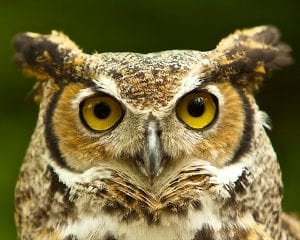 URL:https://western.maineaudubon.org/event/predators-the-balance-of-nature/
CATEGORIES:Talks
END:VEVENT
BEGIN:VEVENT
DTSTART;TZID=America/New_York:20201111T190000
DTEND;TZID=America/New_York:20201111T200000
DTSTAMP:20260131T162348Z
CREATED:20200914T121756Z
LAST-MODIFIED:20260131T162348Z
UID:772-1605121200-1605124800@western.maineaudubon.org
SUMMARY: Centuries of Change in Maine's Forests by Andrew Barton -
DESCRIPTION:Register \nAndrew Barton will describe how Maine forests have changed over the past several centuries in terms of tree species\, forest structure\, and the replacement of old growth with younger forests. He’ll highlight the ecological importance of older forests and some of the exciting strategies for conservation and restoration of these important habitats. \nAndrew Barton is a forest ecologist\, science writer\, and professor of biology at the University of Maine at Farmington. His research focuses on how forests are responding to changing climate\, and wildfires in the mountains of the USA-Mexico borderlands. His current projects focus on an endangered plant species in the region\, and the employment of the new ECOSTRESS instrument on the International Space Station to predict vegetation drought stress and recovery after wildfires. Drew is the author of the award-winning book\, The Changing Nature of the Maine Woods\, and Ecology and Recovery of Old-growth Forests in Eastern North America from Island Press. Drew co-founded the Michigan National Forest Watch and the UMF Sustainable Campus Coalition and was a key player in the Mt. Blue-Tumbledown Conservation Alliance\, which protected 30\,000 acres of forestland in western Maine. He teaches courses on ecology\, conservation\, plants\, and forests\, as well as a travel course on the ecology of Costa Rica.
URL:https://western.maineaudubon.org/event/centuries-of-change-in-maines-forests-by-andrew-barton/
CATEGORIES:Talks
ORGANIZER;CN="Western Maine Audubon":MAILTO:wma@westernmaineaudubon.org
END:VEVENT
BEGIN:VEVENT
DTSTART;TZID=America/New_York:20201014T190000
DTEND;TZID=America/New_York:20201014T200000
DTSTAMP:20260131T162348Z
CREATED:20200914T121511Z
LAST-MODIFIED:20260131T162348Z
UID:767-1602702000-1602705600@western.maineaudubon.org
SUMMARY: Changing Bird Populations in Maine by Herb Wilson -
DESCRIPTION:REGISTER NOW\nSince Maine became a state in 1820 there have been many changes in our bird fauna. Some species have immigrated into the state to become a part of our avifauna. Sadly\, others have declined and\, in some cases\, disappeared. We’ll explore the changes in Maine’s birds over the past two centuries\, using a variety of resources. \nHerb Wilson is a Professor Emeritus of Biology at Colby College where he taught Ornithology\, Evolution and Diversity\, Marine Ecology and Marine Invertebrate Zoology. His primary ornithological interests are the impacts of global climate change on bird migration and the foraging behavior of winter birds in Maine. He is also keenly interested in the odonates and butterflies of Maine.
URL:https://western.maineaudubon.org/event/changing-bird-populations-in-maine-by-herb-wilson/
CATEGORIES:Talks
ORGANIZER;CN="Western Maine Audubon":MAILTO:wma@westernmaineaudubon.org
END:VEVENT
BEGIN:VEVENT
DTSTART;TZID=America/New_York:20200509T130000
DTEND;TZID=America/New_York:20200509T140000
DTSTAMP:20260131T162348Z
CREATED:20200406T103217Z
LAST-MODIFIED:20260131T162348Z
UID:721-1589029200-1589032800@western.maineaudubon.org
SUMMARY: Nightjars in Maine -
DESCRIPTION:PLEASE JOIN US FOR A VIRTUAL TALK\nThe talk will be by Webinar.\nPlease register.\nInstructions or viewing the Webinar will be sent by May 5th to those who register. \nLogan Parker is an assistant ecologist and founder of the Maine Nightjar Monitoring Project. This statewide citizen science project is collecting observations of whip-poor-wills\, nighthawks\, and other nocturnal birds\, some of which are facing widespread declines. \nAttendees will learn about the natural history of Maine’s nightjars\, cryptic and nocturnal birds that are more likely to be heard than seen\, and the efforts involved in monitoring these fascinating birds throughout the state\, from Eliot to Calais\, Kennebunk to Baxter State Park. The project is currently recruiting volunteers to adopt monitoring routes or simply make observations of nightjars in your own backyard. \nLogan Parker is an assistant ecologist residing with his wife in their off- grid cabin in the woods of Central Maine. Logan\, a life-long Mainer\, earned his Master’s Degree from Unity College where he studied Sustainable Natural Resource Management with a focus on biodiversity conservation. He is a birder\, naturalist\, writer\, and wildlife photographer. Logan is also currently working to support the 2nd generation of the Maine Bird Atlas as a Special Species and Habitat Technician\, conducting nocturnal\, alpine\, and winter bird surveys. He is also an ecologist for the Maine Natural History Observatory.
URL:https://western.maineaudubon.org/event/nightjars-in-maine/
CATEGORIES:Talks
ORGANIZER;CN="Western Maine Audubon":MAILTO:wma@westernmaineaudubon.org
END:VEVENT
BEGIN:VEVENT
DTSTART;TZID=America/New_York:20200509T070000
DTEND;TZID=America/New_York:20200509T090000
DTSTAMP:20260131T162418Z
CREATED:20200406T102353Z
LAST-MODIFIED:20260131T162418Z
UID:714-1589007600-1589014800@western.maineaudubon.org
SUMMARY: Annual Warbler Walk -
DESCRIPTION:CANCELLED because of COVID-19 \nContact: Nancy Knapp - 2077786285
URL:https://western.maineaudubon.org/event/annual-warbler-walk/
LOCATION:Whistle Stop Trail\, Farmington
CATEGORIES:Bird Walks
ORGANIZER;CN="Western Maine Audubon":MAILTO:wma@westernmaineaudubon.org
END:VEVENT
BEGIN:VEVENT
DTSTART;TZID=America/New_York:20200408T190000
DTEND;TZID=America/New_York:20200408T200000
DTSTAMP:20260131T162348Z
CREATED:20200406T103047Z
LAST-MODIFIED:20260131T162348Z
UID:718-1586372400-1586376000@western.maineaudubon.org
SUMMARY: What's Happening To Our Birds? -
DESCRIPTION:CANCELLED\nRESCHEDULED TO SEPT 9th \nThe numbers are staggering. A recent article in the journal Science documents declines among 64% of all eastern forest bird species—a loss of 167 million birds—and among 50% of all boreal forest species—a loss of 501 million birds— in North America alone. That means nearly one in four of all eastern forest birds and one in three of all boreal forest birds that were coloring the forest with their flashy feathers and cheerful songs in 1970 are no longer with us. \nThere are many reasons for these declines. Some of the more persistent are habitat loss on both breeding and wintering grounds\, loss or degradation of migratory stopovers\, decline or contamination of insect food from overuse of pesticides\, collisions with windows and other human structures\, and predation from cats. Individuals can take simple steps to steward birds and habitat\, and every little bit helps. Maine\ncan do more than a little bit; in fact\, we can play an outsized role in helping to stem the decline. \nOur state has the largest remaining block of forest in the eastern U.S. and these forests are vital to the breeding success of millions of forest songbirds every year. We are the “baby bird factory†for the entire Atlantic Flyway. Because of that\, much of northern and western Maine has been designated as a globally significant Important Bird Area by National Audubon and BirdLife International. We have both an opportunity and a\nresponsibility to help these declining birds. \nCome learn more about how the data were gathered\, who’s at risk and why\, and what you can do to help stem the declines. All landowners in the region with grasslands or forestlands can help change that by creating or improving habitat for birds in Maine. Your efforts to care for your woods\, fields and waters can make a big difference! \nSally Stockwell is a wildlife ecologist with experience in conservation of nongame\, rare\, and endangered species in freshwater wetlands\, coastal beaches and marshes\, and northern forests. She has additional experience as an interpretive naturalist\, environmental education instructor\, and outdoor adventure leader. Sally holds a Ph.D. in wildlife ecology and an M.S. in wildlife management from the University of Maine and a B.S. in biology from The Evergreen State College\, Olympia\, Washington. In 2008\, Sally was the recipient of the UMaine Department of Wildlife Ecology Award for Professional Excellence for long-term career service to wildlife conservation. Sally serves on numerous state committees and has been actively involved in town planning\, open space planning.
URL:https://western.maineaudubon.org/event/whats-happening-to-our-birds/
LOCATION:Roberts Learning Center\, Farmington\, ME\, United States
CATEGORIES:Talks
ORGANIZER;CN="Western Maine Audubon":MAILTO:wma@westernmaineaudubon.org
END:VEVENT
END:VCALENDAR
URL:https://western.maineaudubon.org/event/predators-the-balance-of-nature/
CATEGORIES:Talks
END:VEVENT
BEGIN:VEVENT
DTSTART;TZID=America/New_York:20201111T190000
DTEND;TZID=America/New_York:20201111T200000
DTSTAMP:20260131T162348Z
CREATED:20200914T121756Z
LAST-MODIFIED:20260131T162348Z
UID:772-1605121200-1605124800@western.maineaudubon.org
SUMMARY: Centuries of Change in Maine's Forests by Andrew Barton -
DESCRIPTION:Register \nAndrew Barton will describe how Maine forests have changed over the past several centuries in terms of tree species\, forest structure\, and the replacement of old growth with younger forests. He’ll highlight the ecological importance of older forests and some of the exciting strategies for conservation and restoration of these important habitats. \nAndrew Barton is a forest ecologist\, science writer\, and professor of biology at the University of Maine at Farmington. His research focuses on how forests are responding to changing climate\, and wildfires in the mountains of the USA-Mexico borderlands. His current projects focus on an endangered plant species in the region\, and the employment of the new ECOSTRESS instrument on the International Space Station to predict vegetation drought stress and recovery after wildfires. Drew is the author of the award-winning book\, The Changing Nature of the Maine Woods\, and Ecology and Recovery of Old-growth Forests in Eastern North America from Island Press. Drew co-founded the Michigan National Forest Watch and the UMF Sustainable Campus Coalition and was a key player in the Mt. Blue-Tumbledown Conservation Alliance\, which protected 30\,000 acres of forestland in western Maine. He teaches courses on ecology\, conservation\, plants\, and forests\, as well as a travel course on the ecology of Costa Rica.
URL:https://western.maineaudubon.org/event/centuries-of-change-in-maines-forests-by-andrew-barton/
CATEGORIES:Talks
ORGANIZER;CN="Western Maine Audubon":MAILTO:wma@westernmaineaudubon.org
END:VEVENT
BEGIN:VEVENT
DTSTART;TZID=America/New_York:20201014T190000
DTEND;TZID=America/New_York:20201014T200000
DTSTAMP:20260131T162348Z
CREATED:20200914T121511Z
LAST-MODIFIED:20260131T162348Z
UID:767-1602702000-1602705600@western.maineaudubon.org
SUMMARY: Changing Bird Populations in Maine by Herb Wilson -
DESCRIPTION:REGISTER NOW\nSince Maine became a state in 1820 there have been many changes in our bird fauna. Some species have immigrated into the state to become a part of our avifauna. Sadly\, others have declined and\, in some cases\, disappeared. We’ll explore the changes in Maine’s birds over the past two centuries\, using a variety of resources. \nHerb Wilson is a Professor Emeritus of Biology at Colby College where he taught Ornithology\, Evolution and Diversity\, Marine Ecology and Marine Invertebrate Zoology. His primary ornithological interests are the impacts of global climate change on bird migration and the foraging behavior of winter birds in Maine. He is also keenly interested in the odonates and butterflies of Maine.
URL:https://western.maineaudubon.org/event/changing-bird-populations-in-maine-by-herb-wilson/
CATEGORIES:Talks
ORGANIZER;CN="Western Maine Audubon":MAILTO:wma@westernmaineaudubon.org
END:VEVENT
BEGIN:VEVENT
DTSTART;TZID=America/New_York:20200509T130000
DTEND;TZID=America/New_York:20200509T140000
DTSTAMP:20260131T162348Z
CREATED:20200406T103217Z
LAST-MODIFIED:20260131T162348Z
UID:721-1589029200-1589032800@western.maineaudubon.org
SUMMARY: Nightjars in Maine -
DESCRIPTION:PLEASE JOIN US FOR A VIRTUAL TALK\nThe talk will be by Webinar.\nPlease register.\nInstructions or viewing the Webinar will be sent by May 5th to those who register. \nLogan Parker is an assistant ecologist and founder of the Maine Nightjar Monitoring Project. This statewide citizen science project is collecting observations of whip-poor-wills\, nighthawks\, and other nocturnal birds\, some of which are facing widespread declines. \nAttendees will learn about the natural history of Maine’s nightjars\, cryptic and nocturnal birds that are more likely to be heard than seen\, and the efforts involved in monitoring these fascinating birds throughout the state\, from Eliot to Calais\, Kennebunk to Baxter State Park. The project is currently recruiting volunteers to adopt monitoring routes or simply make observations of nightjars in your own backyard. \nLogan Parker is an assistant ecologist residing with his wife in their off- grid cabin in the woods of Central Maine. Logan\, a life-long Mainer\, earned his Master’s Degree from Unity College where he studied Sustainable Natural Resource Management with a focus on biodiversity conservation. He is a birder\, naturalist\, writer\, and wildlife photographer. Logan is also currently working to support the 2nd generation of the Maine Bird Atlas as a Special Species and Habitat Technician\, conducting nocturnal\, alpine\, and winter bird surveys. He is also an ecologist for the Maine Natural History Observatory.
URL:https://western.maineaudubon.org/event/nightjars-in-maine/
CATEGORIES:Talks
ORGANIZER;CN="Western Maine Audubon":MAILTO:wma@westernmaineaudubon.org
END:VEVENT
BEGIN:VEVENT
DTSTART;TZID=America/New_York:20200509T070000
DTEND;TZID=America/New_York:20200509T090000
DTSTAMP:20260131T162418Z
CREATED:20200406T102353Z
LAST-MODIFIED:20260131T162418Z
UID:714-1589007600-1589014800@western.maineaudubon.org
SUMMARY: Annual Warbler Walk -
DESCRIPTION:CANCELLED because of COVID-19 \nContact: Nancy Knapp - 2077786285
URL:https://western.maineaudubon.org/event/annual-warbler-walk/
LOCATION:Whistle Stop Trail\, Farmington
CATEGORIES:Bird Walks
ORGANIZER;CN="Western Maine Audubon":MAILTO:wma@westernmaineaudubon.org
END:VEVENT
BEGIN:VEVENT
DTSTART;TZID=America/New_York:20200408T190000
DTEND;TZID=America/New_York:20200408T200000
DTSTAMP:20260131T162348Z
CREATED:20200406T103047Z
LAST-MODIFIED:20260131T162348Z
UID:718-1586372400-1586376000@western.maineaudubon.org
SUMMARY: What's Happening To Our Birds? -
DESCRIPTION:CANCELLED\nRESCHEDULED TO SEPT 9th \nThe numbers are staggering. A recent article in the journal Science documents declines among 64% of all eastern forest bird species—a loss of 167 million birds—and among 50% of all boreal forest species—a loss of 501 million birds— in North America alone. That means nearly one in four of all eastern forest birds and one in three of all boreal forest birds that were coloring the forest with their flashy feathers and cheerful songs in 1970 are no longer with us. \nThere are many reasons for these declines. Some of the more persistent are habitat loss on both breeding and wintering grounds\, loss or degradation of migratory stopovers\, decline or contamination of insect food from overuse of pesticides\, collisions with windows and other human structures\, and predation from cats. Individuals can take simple steps to steward birds and habitat\, and every little bit helps. Maine\ncan do more than a little bit; in fact\, we can play an outsized role in helping to stem the decline. \nOur state has the largest remaining block of forest in the eastern U.S. and these forests are vital to the breeding success of millions of forest songbirds every year. We are the “baby bird factory†for the entire Atlantic Flyway. Because of that\, much of northern and western Maine has been designated as a globally significant Important Bird Area by National Audubon and BirdLife International. We have both an opportunity and a\nresponsibility to help these declining birds. \nCome learn more about how the data were gathered\, who’s at risk and why\, and what you can do to help stem the declines. All landowners in the region with grasslands or forestlands can help change that by creating or improving habitat for birds in Maine. Your efforts to care for your woods\, fields and waters can make a big difference! \nSally Stockwell is a wildlife ecologist with experience in conservation of nongame\, rare\, and endangered species in freshwater wetlands\, coastal beaches and marshes\, and northern forests. She has additional experience as an interpretive naturalist\, environmental education instructor\, and outdoor adventure leader. Sally holds a Ph.D. in wildlife ecology and an M.S. in wildlife management from the University of Maine and a B.S. in biology from The Evergreen State College\, Olympia\, Washington. In 2008\, Sally was the recipient of the UMaine Department of Wildlife Ecology Award for Professional Excellence for long-term career service to wildlife conservation. Sally serves on numerous state committees and has been actively involved in town planning\, open space planning.
URL:https://western.maineaudubon.org/event/whats-happening-to-our-birds/
LOCATION:Roberts Learning Center\, Farmington\, ME\, United States
CATEGORIES:Talks
ORGANIZER;CN="Western Maine Audubon":MAILTO:wma@westernmaineaudubon.org
END:VEVENT
END:VCALENDAR